Showing posts with label Review. Show all posts

Sunday, 1 February 2026

2025 review - butterflies et al

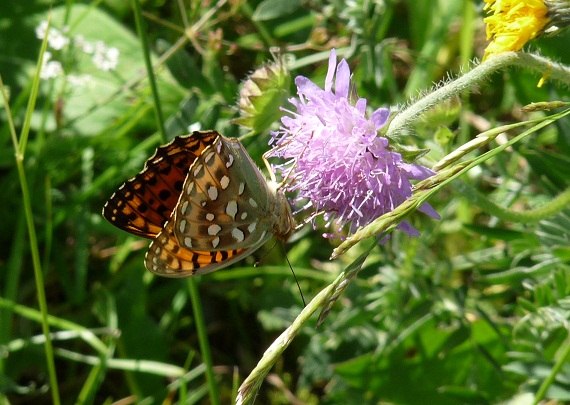
I did a bit better finding new butterflies during 2025, starting with Reverdin's Blue at a German nature reserve close to Basel.  From there, I took the train down to Barcelona for a few days, seeing Iberian Scarce Swallowtail and photographing both False Ilex Hairstreak and Spanish Gatekeeper.  My favourite spot in Berlin again turned up trumps with a repeat sighting of Large Chequered Skipper, first seen there in 2024, as well as my lifer Chestnut Heath.  Despite returning to Modane for the fourth time, my July visit there still provided another 5 lifers - Alpine Blue, Mountain Fritillary, Grison's Fritillary, Silky Ringlet and Dewy Ringlet, meaning I have now photographed over 100 species in the area!  I then got a Woodland Grayling in Fontainebleau Forest, before trying some Pyrenean butterflying near Luchon, succesfully finding three more ringlets - the local form of Yellow-spotted, a single Water, and the endemic Pyrenees Brassy.  My 15th and final new species of the year was this Astaut's Blue, the southern equivalent of Common Blue, in the Algarve.  With all this butterflying around Europe, I didn't find any new ones in Belgium, although a trip to a butterfly reserve in the province of Luxembourg did get me my lifer Dainty Damselfly.  Finally, I didn't realise it at the time, but documenting the seals in Ostend harbour, I managed to get a picture of two species together - Grey Seal and Harbour Seal.

Saturday, 3 January 2026

2025 review - birds

2025 got off to a good start with international twitches to two lifers but rapidly ran out of steam, with just 1.5 more for the rest of the year.  Here, as usual, are my best birds of the past twelve months (lifers in CAPS).

January - the gorgeous, 1st winter male MOUSSIER'S REDSTART I successfully twitched near Montpellier.
February - another international twitch to the hugely popular SPECTACLED EIDER found on Texel in early January and which stayed until early June.  Against all expectation, he reappeared in early October but, unfortunately, became sick and had to be taken into care last week.

March - Long-tailed Tit (Brussels); a tip from a photographer I meet regularly on my local patch led me to one of their nests.
April - Savi's Warbler (Uitkerkse Polders); having seen my first one for Belgium there in 2024, there seemed to be a considerable influx this spring with at least three singing birds.
May - BALEARIC SHEARWATER (Spain); good looks, including comparisons with Yelkouan Shearwater, of this long overdue lifer during a birding trip near Sitges with Catalan Bird Tours.
June - Tree Sparrow (Berlin); Moorlinse Buch has become my 'patch' away from home whenever I visit Berlin so I was especially pleased to see the local Tree Sparrows with some very cute fledglings.
July - Lammergeier (Alps and Pyrenees); an immature passing right over me in the Alps followed by prolonged views of two adults later in the month.
August - Hoopoe (Brussels); another one on my local patch, in exactly the same spot as the last one three years ago, this one even showed well for one of my guided tours.
September - White Stork (Brussels); some unusually successful vismig forecasting resulted in me seeing a flock of around 150 from my balcony, with a second, smaller group later in the month.
October - Common Rosefinch (Vlieland); a self-found, 1st-winter bird was the rarest species during another autumn weekend on Vlieland.
November - Goshawk (Cologne); a pair seen exceptionally well in a city park.  Berlin is famous for its city Goshawks but I had no idea they were in the parks of Cologne too.
December - Brambling (West Flanders and Brussels); three on the ground under a feeder at a reserve in West Flanders were eclipsed by the discovery of a huge roost (at least for Brussels) of around 600 individuals towards the end of the month!


So, as you may have noticed, a lot of my 2025 birding was outside of Belgium, resulting in a Belgian year list of 191 species, the last addition being a male Smew at one of their few remaining regular wintering spots in Belgium.  I added three new species to my Belgian list - the heard-only Thrush Nightingale, Woodchat Shrike and Pectoral Sandpiper, and my balcony list stayed on 80 species although I finally managed to see a silhouette of the Tawny Owl which first appeared briefly in November 2024 and seems to have returned. 
My various trips around Europe took my year list to 282 species, the lifers being Moussier's Redstart, Spectacled Eider, Balearic Shearwater and heard-only Red-necked Nightjar, which, together with a few armchair splits, takes me to 2810 in the world.
My bird of the year, of course, has to be the rock-star Spectacled Eider; here's hoping he recovers and can be released again to continuing hanging around with the Common Eiders off Texel.

Wednesday, 12 February 2025

2024 review bis

2024 was not just about the birds since I finally added two long-wanted butterfly species to my Belgian list, namely Poplar Admiral and Cranberry Fritillary.  That takes my Belgian butterfly list to 84 of the 90 or so regularly-occurring species, 82 of which I have photographed.  A trip to Berlin also got me the extinct-in-Belgium Large Chequered Skipper, and my first visit to Corsica got me another 5 new species; Bath White, Cardinal, the endemics Corsican Wall Brown and Corsican Small Heath, plus a brief glimpse of a Nettle-tree Butterfly.  My 9th new butterfly species of the year were some skippers I photographed in Bourg-St-Maurice in September which have been identified as Oberthür's Grizzled Skipper, one of the species I still need to find in Belgium, where it is extremely rare and localised.
My expedition to the Hautes Fagnes for Cranberry Fritillary also got me my first Spearhead Bluet/Northern Damselfly, taking me to 40 species of odonata in Belgium, and I added Southern Skimmer, a species I'd only seen in Israel before, to my European list.


Saturday, 1 February 2025

2024 review

It's a month late thanks mainly to the unexpected Moussier's Redstart, which kicked off my 2025 list in style, but here is my review of 2024, starting with the monthly bird highlights (lifers in CAPS).

January - Bittern (West Flanders); a visiting birder wanted to see Bittern so I took him to the best place I know, hoping we might get to see one.  Our first view was of a distant bird sitting in a waterlogged field but, later on, it or another appeared right in front of the hide and started blowing bubbles in the water to attract fish.  Crazy, prolonged views of this unusual behaviour ensued so my visitor was thrilled.
February - Black Woodpecker (Brussels); Black Woodpecker is always difficult to see in Brussels so I was happy to locate a female by her calls.  She was perched on a treetrunk and, while I was watching her, a Green Woodpecker, climbed up the same tree and stopped just below her!
March - Common Crane (Brussels); with prolonged easterlies pushing Cranes over Brussels and after several near misses, I finally managed to spot a migrating group of around 70 from my balcony.
April - HERMIT WARBLER (Eugene, OR); the main target of my US trip, I finally saw one amongst a crazy fall of 100+ warblers on my last morning in Oregon before flying home.
May - Savi's Warbler (Uitkerkse Polders); one seen singing while guiding was the first I have seen in Belgium, having only heard it before.
June - CORSICAN NUTHATCH (Corsica); a morning with a local birdguide was successful in finding all three of my target species during a short, last-minute getaway.
July - Raven (Namur and Antwerp); a noisy family at close range during a butterfly trip in Namur, with another 1 or 2 heard over Kalmthout Heath, where it is considerably rarer.
August - Hen Harrier (Brussels); autumn migration got underway early with a 2nd-year male passing over my balcony together with a female Marsh Harrier.
September - Siberian Stonechat (Ostend); a twitch to the immature showing extremely well at the coast and my first in Belgium.
October - Rose-coloured Starling (Texel); another twitch to the nice, pink adult which spent several months in a Den Burg garden.
November - Tawny Owl (Brussels); one heard twice from my living room was very unexpected since they have never been recorded in my neighbouring park (and I have listened for them many times).  Presumably a young bird dispersing from the nearby forest, it was not heard again.
December - Red-necked Grebe (Amsterdam); always nice to see, this overwintering bird was easy to find in the suburbs of Amsterdam.

I thus ended the year with a total of 409 species, 221 of which were in Europe and 163 in Belgium.
I got 12 lifers during the year (9 in the US and 3 in Corsica), with Ross's Goose and Siberian Stonechat being my only Belgian ticks.  The Ross's Geese were not only new for me but for all Belgian birders, being the first proven-wild birds accepted to the Belgian list.  My balcony list increased by three species (Common Crane, Hen Harrier and the heard-only Tawny Owl) to 80 species, which is pretty impressive for the centre of Brussels. 
Whilst the Hermit Warbler and Corsican Nuthatch were the main targets of their respective trips, I think my bird of the year has to be the adult Rose-coloured Starling I went all the way to Texel to twitch since I had only ever seen a drab juvenile some 26 years previously!

Sunday, 31 December 2023

2023 review

Another year has passed by, so it's time for another review of my best birds of the past twelve months (lifers in CAPS).

January - Brambling (Brussels); in a good winter for them, I first saw one amongst Chaffinches on my Brussels patch, then well over 100 of them in the Sonian Forest.
February - Alpine Accentor (Luxembourg Province); a bizarre, medieval twitch to the individual overwintering within the walls of Bouillon castle.
March - Western Bonelli's Warbler (Forêt de Fontainebleau, France); a single, early individual located by its occasional bursts of song.
April - Booted Eagle (Mechels Broek, Antwerpen); my first in Belgium spotted circling with Buzzards during a guided tour.
May - Black-winged Stilt (West Flanders); a huge invasion this spring resulted in several breeding pairs, with 31 seen in a small, flooded field near Bruges.
June - ROCK PARTRIDGE (Savoie, France); the first of two butterflying to the trips to Modane in the French Alps finally got me this elusive species thanks to local guide Olivier Trompette.
July - Honey Buzzard (Brussels, Antwerp and Luxembourg); in what must have been a good year for them, I saw three different birds this month, starting with one over the Sonian Forest.
August - Short-toed Eagle (Liège Province); another guiding trip, another eagle, this time an immature migrating along the valley near Trois-Points and only my second in Belgium.
September - Common Crane (Otmoor, UK); a trip to England included a visit to RSPB Otmoor, where I saw an immature Crane, part of the recently re-established breeding population.
October - YELLOW-BROWED BUNTING (Vlieland, NL); a mammoth journey was required to see this 1st-year bird on the last day of its stay!
November - ANDEAN COCK-OF-THE-ROCK (Ecuador); just one of the many highlights of a ten-day birding tour of the Andes.
December - Redwing (Brussels) - present almost daily in the park neighbouring my apartment and even heard singing, which is rare away from their breeding grounds.

During the year, I saw or heard 179 species in Belgium (just 1 more than last year!), with trips to the UK, The Netherlands, France and Berlin taking my European year-list to 229.  Three of these were lifers, namely Rock Partridge, Radde's Warbler and Yellow-browed Bunting, and I added three new species to my Belgian list; Alpine Accentor, Booted Eagle and Radde's Warbler.
I flew to Ecuador the long way round, adding a stopover in Atlanta, where Brown-headed Nuthatch was the only new addition to my life-list, before the flood of new species in Ecuador.  Of the 349 encountered there, 223 (almost two-thirds) were new for me, pushing my life-list to 2789 species, which means I have now seen more than 1/4 of all the birds in the world!
2023 thus ended on 618 species seen/heard in the world, the best of which was of course my most-wanted one, the Cock-of-the-Rock. 
May I wish you all a happy and birdy 2024.

Sunday, 1 January 2023

2022 review

2022 was a bit of a rollercoaster for me, as you can read from my annual review of my monthly birding highlights of the past year (lifers in CAPS).

January - Golden Plover (Uitkerkse Polders and Zeeland, NL); I was pleased to see around 400 in the polders but this was blown out of the water by the 3000-4000 at Plan Tureluur.
February - Middle Spotted Woodpecker (Brussels); a pair seen excavating a potential nesthole on my Brussels patch.
March - Wigeon (Reeuwijksche Plassen, NL and Uitkerkse Polders); an excited, pre-migration gathering of perhaps as many as 20,000-30,000 making for an incredible sight and sound.
April - BLACK-BROWED ALBATROSS (Bempton Cliffs, GB); an international twitch to the returning individual gave me my first albatross anywhere in the world.


May - Arctic Tern (Ostend); 5 seen well on migration and in direct comparison with Common Terns.
June - White Stork (Brussels); 1 passing high over my balcony was pretty much the only bird I saw during six weeks of being bedridden with two sprained ankles.
July - Cirl Bunting (Namur province); my first post-injury birding was a twitch to a male which had set up territory near Dinant, and my first in Belgium.
August - Pied Flycatcher (Brussels); one spotted from my balcony was an unexpected highlight of being stuck at home in COVID-19 quarantine.
September - Hoopoe (Brussels); it took me two attempts to find the bird which spent five days on my Brussels patch.
October - WHITE-NECKED ROCKFOWL (Ghana); the undoubted highlight of my birding tour of Ghana.
November - Common Crane (Cologne, DE); a large group first heard and then seen passing over my hotel during a non-birding, city break. 
December - Hume's Warbler (Eilat, IL and Ghent); an unprecented two seen this month, both in city parks.

Blue-spotted Arab, Eilat

I finished the year having seen or heard just 178 species in Belgium, 206 in Europe, plus another 48 in Israel.  Three of these were lifers - Blyth's Reed Warbler near Gouda, NL in March, the Black-browed Albatross, and October's Booted Warbler in Zeebrugge.  My Ghanaian trip provided another 190 lifers and took my total year list to 571 species.  Getting to see the legendary picathartes was amazing but the bird of the year title has to go to the Black-browed Albatross at Bempton since it is a family I have long wanted to see and we almost missed it as it only showed for a couple of hours on our first morning. 

My Belgian list increased by five (Ring-billed Gull, Cirl Bunting, Long-tailed Skua, Booted Warbler and Pallas' Warbler) to a nice, round 330 species, I added three species (Pied Flycatcher, Hoopoe and migrating Woodlark) to my Brussels patch list, which now stands at 116 species for the reserve, and my apartment/balcony list increased by just two (White Stork and heard-only Willow Warbler) to 75 species.
Being out of action for a large chunk of spring meant that I did very little butterflying and dragonflying this year. 
May 2023 bring us all lots more birds, butterflies and dragonflies.

Thursday, 30 December 2021

2021 review

Another challenging year dominated by the global pandemic is almost over so it is time for my traditional review of the past twelve months, starting with my month-by-month birding highlights (lifers in CAPS).

January - Dusky Warbler (Bredene); last year's bird of the year lingered on in its favourite park so I got my year listing off to a good start by paying it a third visit on 2nd.
February - Woodcock (Ostend); a prolonged cold spell brought unprecedented numbers of this species to the coast, where I got a rare opportunity to see them on the ground.
March - Oriental Turtle Dove (Heist); my first real twitch of the year and the first new bird for my Belgian list.
April - FRANKLIN'S GULL (Beveren); a major expedition was required for me to see this American vagrant during its short stay in deepest West Flanders.
May - Griffon Vulture (Brabant Wallon); 24 slowly taking off from their overnight roost.
June - Nightjar (Kalmthout Heath); a long-overdue reacquaintance with the churring goat-milker.
July - Rock Thrush (Alps); a nice male seen exceptionally well on my first evening in the Alps.
August - Zitting Cisticola (Heist); a constantly-displaying bird confirming that the species is slowly recolonising the coast.
September - Nutcracker (Logbiermé); 3 or 4 birds comically struggling their way uphill with their crops full of acorns.
October - Short-eared Owl (Brussels); THE surprise of the year was a migrant seen from my living room!
November - Western Swamphen (Het Vinne); another successful twitch to a first for Belgium.
December - Ross's Gull (Nieuwpoort); another first for Belgium seen really well as it repeatedly passed just above my head.

So, Franklin's Gull was the only new bird I saw this year and is, therefore, my bird of the year for 2021.  It was not the only addition to my lifelist, though, since sorting through my Brazilian photo's for another project led me to review a parrotlet picture I took back in 2011.  At the time, I was told that flavistic individuals were much commoner amongst Blue-winged Parrotlets than the local Dusky-billed Parrotlets.  Since the former species had never been recorded in the area and the local bird-guide told me it wasn't possible, I forgot all about my picture.  Spurred on by several, unconfirmed reports of Blue-winged Parrotlets in exactly the same location over the intervening years, and noticing a second, normal-coloured individual, which also shows the all-important pale upper mandible, I thus sent my picture to some new contacts I didn't know back then, all of whom agree it is the first documented record of Blue-winged Parrotlet (now split into three species) for the Alta Floresta region!


As an antidote to the various travel restrictions, I set myself the dual targets of seeing 250 species in Belgium and 150 within Brussels this year.  I soon realised, though, that the two were incompatible since birding in Brussels meant I was missing good stuff elsewhere, and vice versa.  I thus dropped the Brussels one (which ended up on 116 species) in favour of a Belgian big year.  It was difficult to stay motivated throughout the ongoing pandemic, however, especially once I'd caught up with most of the easy summer migrants, meaning the remaining species all required considerable effort or several attempts to see.  Despite falling just short, at 240 species, this is still my biggest Belgian year so far and the additional effort resulted in seven new species for my all-time Belgian list (Oriental Turtle Dove, Franklin's Gull, Sooty Shearwater, Rustic Bunting, Guillemot, Western Swamphen and Ross's Gull), which now stands at a respectable 325 species.  I left Belgium on just four occasions this year, all very brief, adding Hooded Crow (Berlin), plus 7 species in the Alps (Short-toed Eagle, Hoopoe, Crag Martin, Rock Thrush, Rock Bunting, Western Bonelli's Warbler and Italian Sparrow), and thus taking my overall year-list to 248 species.  With all my focus on finding new birds, the butterflies and odonata took a back seat this year and I didn't see any new species of either in Belgium, although my butterflying break in the Alps was very successful, with a total of 26 new species out of 61 identified in just two full days there. 
I do not plan another big year attempt for 2022 and am looking forward to some more relaxed birding, regularly visting my Brussels patch and finding my own birds rather than constantly chasing after other people's.  
Stay safe, healthy and make the most of what nature has to offer in 2022.

Wednesday, 30 December 2020

2020 review

Well, 2020 got off to a promising start but soon ground to a halt as the pandemic spread around the world.
Here, nevertheless, are my best bird sightings of the past twelve months (lifers in CAPS).

January - DUSKY THRUSH (Antwerp province); a beautiful, new species on only the fourth day of the year as I joined the crowds visiting the popular Dusky Thrush near Oud-Turnhout.  I got a very brief glimpse as soon as I arrived but then had to wait another 40 minutes for it to appear again.
February - Red-necked Grebe (Berlin); 3 pairs in breeding plumage making a lot of noise as they displayed on a city lake, the first time I have heard this species calling since I usually only get to see wintering birds.
March - Swallow (Brussels); having been made temporarily unemployed and facing an indefinite period confined to my apartment and the surrounding area, my first Swallow of the year migrating past my balcony on 28th provided a much-needed glimmer of hope.
April - Garganey (Brussels); a pair unexpectedly discovered in a busy city park on my way home from a walk in the forest.
May - Marsh Warbler (Brussels, East Flanders, Luxembourg province); one discovered singing on my Brussels patch, where it is a scarce visitor, towards the end of the month, followed by lots more frantically singing in typical marshy habitat a few days later and another in completely different (much drier) habitat in Belgian Luxembourg.
June - Night Heron (Flemish Brabant); a nice surprise since this usually secretive species was sitting out in the open.
July - Black Stork (De Plateaux - NL); my first Black Stork in the Netherlands circling overhead during the 20 minutes or so I spent just over the border from the Hageven in Belgian Limburg.
August - Black-winged Kite (Hautes-Fagnes); what was almost certainly an immature pair mating, hunting and sitting on a nest on the last day of their weeklong stay. 
September - Curlew Sandpiper (Uitkerkse Polder); my first in several years, I successfully twitched a juvenile at the end of two days spent at the coast.
October - OLIVE-BACKED PIPIT (De Fonteintjes); it took me two attempts but I eventually got good looks at my first, and well overdue, OBP. 
November - DUSKY WARBLER (Bredene); hot on the heels of my first OBP, there would have been something wrong if I didn't connect with my first-ever Dusky Warbler this year considering the unprecedented amount of birds seen at the Belgian coast, and elsewhere, this autumn.
December - Long-tailed Duck (Ostend); Long-tailed Ducks are always nice to see, whatever their plumage, but even more so when they are accompanied by a female Scaup and a female/immature Common Scoter, all of which were new for the year!


No offence to the Olive-backed Pipit, but the dusky duo of thrush and warbler were in contention for my bird of the year, the Dusky Warbler winning the duel as a result of the incredible influx we witnessed this autumn which saw a record nine (at least) different individuals reported on 21 November.  Getting anything more than a brief glimpse of this skulker is already a challenge so I didn't even try to take a picture but a handful of photographers did eventually succeed.  I was just happy to see it so well the first time and then pay another visit to the same bird three weeks later.  It is still there now and looks set to remain there for the rest of the winter so will no doubt be attracting plenty of year-listers, myself included, in a couple of days' time.

So, despite everything, I managed to see three new species this year, with Black-winged Kite and November's Crag Martin also being new additions to my Belgian list, which now stands at 318 species.  The first period of confinement in early spring saw me going through some old trip notebooks and discovering five splits which had passed me by, although I lost two due to a lump and one more as the result of correcting a long-standing misidentification.  The overall result for my lifelist was thus an increase of five species.  During the year, I managed to see (or hear) a total of 214 bird species, 202 of which were in Belgium and 112 in Brussels.  I didn't really get to travel much this year but the additional 12 species came from my short visits to The Netherlands, Berlin and Givet, in northern France.  My apartment list increased by 6 species (Black Redstart, Marsh Harrier, Goldfinch, Merlin, Greylag Goose and White-fronted Goose) and my Brussels patch list by just one - House Sparrow!
Spending most of the spring migration confined to Brussels put paid to a big year for birds, but the travel restrictions within Belgium were lifted just as the butterflies were getting going so I made a serious effort to plug some of the gaps in my Belgian list, adding eleven species as a result, eight of which were lifers, with a record 69 species (67 in Belgium) for the year.

Large Skipper, Luxembourg province, May

With the butterflies keeping me so busy, I had little time for odonata this year although I did manage to identify three new species - Southern Emerald Damselfly, Golden-ringed Dragonfly and the lovely Green-eyed Hooktail, which I saw twice.  Finally, I also saw one new species of orchid this year during a butterfly trip to the Fagnes.

Dactylorhiza sphagnicola, Fagne de Malchamps (Liège province), June

I would like to wish you all a nature-filled and healthy 2021!

Sunday, 12 January 2020

2019 review

I had been meaning to post this earlier but 2020 has already provided plenty of distractions, what with my lifer Dusky Thrush, helping discover a new species of butterfly and, this weekend, twitching the 9th Little Curlew for the Western Palearctic amongst its Curlew friends in North Holland.
Here, though, is my traditional look back over the year just gone, the monthly highlights of which were as follow (lifers in CAPS);

January - Kingfisher (Brussels); seen well on 1st and at least three more times during the month, including one catching a fish at my Brussels patch.
February - Goshawk (Brussels); another scare, local species seen three times duing the month, with perhaps as many as five vocalising during a forest walk late in the month.
This was also the month I set myself the challenge of trying to photograph a hyperactive Long-tailed Tit but I failed miserably, this being the best I could do.


March - Goosander (Brussels); a new species for my patch list, it was first reported as a female but later reidentified as a 2cy male and lingered in Brussels until the end of August.
April - Red Kite (Brussels); I spotted my first one in Brussels from my apartment as it migrated north.
May - Redshank (Brussels); another new species for my patch list, I was very lucky to be there just as this migrating individual dropped in to check out the ponds before continuing its migration less than a minute later.
June - Tufted Duck (Brussels); although common in winter, only a few Tufted Ducks remain over the summer and finding a female with 7 ducklings was the first time I've been able to confirm breeding within Brussels.
July - Common Crossbill (Kalmthout Heath); the song had me first thinking they were Woodlarks until I managed to locate a displaying Crossbill during a guiding trip.
August - STILT SANDPIPER (NL); my first lifer of the year, twitched by bike from Amsterdam.
September - Merlin (Uitkerkse Polder, NL); a species I usually struggle to add to my year list, the first observation was a typically brief fly-by, while the second, also a migrant, was seen quite well.
October - Yellow-browed Warbler (Brussels); an unexpected discovery on my way to the supermarket!
November - BASALT WHEATEAR (Israel); although not strictly a lifer since it is currently considered a subspecies of Mourning Wheatear, this was another good and unexpected discovery which was subsequently twitched by several Israeli birders, some of whom got great pictures.
December - PINE GROSBEAK (Oslo); eighteen of one of my most wanted European species seen at point-blank range as a result of this year's exceptional invasion into southern Scandinavia.

This was not a great birding year for me since, as you can probably tell from the above locations, almost all of my birding until May was within Brussels.  After that, a new job with virtually no holidays meant the only trips I could do were a weekend in Dublin, five days in Israel and the short twitch to Oslo.  Still, the focus on local birding did provide an additional three species (Cetti's Warbler, Goosander and Redshank) for my Brussels patch list, which now stands at 108 species!  My Belgian year list reached 168 species, 110 of which were in Brussels.  Dutch excursions, a day at Rutland Water, and the Dublin and Oslo trips took my European year list to 202, with my short break in Israel making a total year list of 241 species.  Although Stilt Sandpiper, Black Scrub-Robin and Pine Grosbeak were three great additions to my life-list, they were all more or less expected since they were twitches (or in the case of Black Scrub-Robin, targeted searching).  The bird of the year award, therefore, has to go to the Yellow-browed Warbler, since it was my most unexpected and exciting discovery of the year, and right on my doorstep too!


My butterfly year was also pretty quiet since I only added Weaver's Fritillary to my Belgian list, although I did identify four new species in Israel.  I had better luck with the odonata, though, seeing my first Scarce Blue-tailed Damselfly, Common Clubtail and Keeled Skimmer during the year.

Sunday, 30 December 2018

2018 review


As 2018 draws to a close, it is time for my traditional review of the year, the birdy highlights of the past twelve months being as follows (lifers in CAPS);

January - ROSS'S GULL (NL); a first-winter successfully twitched in Vlissingen harbour, where it showed extremely well.  One of those near-mythical, high-Arctic species which very rarely turn up this far south.
February - HOUBARA BUSTARD (Canaries); excellent, close-up views of perhaps five individuals in the desert-like habitat of Fuerteventura.
March - Icelandic Redwing (Brussels); a self-found individual, this is an extremely rare bird in Belgium as a whole and probably the very first for Brussels.
April - Lesser Spotted Woodpecker (Brussels); the final year of the Brussels woodpecker survey, I finished off in style by finding two drumming birds in my sector as well as seeing a female.
May - WESTERN ORPHEAN WARBLER (Namur province); a long walk amongst beautiful scenery for a few brief glimpses of this first-for-Belgium.
June - SCALY-BREASTED WREN aka Southern Nightingale-Wren (Cristalino); the first of just three lifers seen during my summer season at Cristalino and, without doubt, the best story of the year.
Back in 2014, I was walking one of the forest trails by myself when I saw what looked just like a Dipper hop up onto a log, flick its wings, call briefly, then disappear.  Despite mailing a local expert with a description, including the call, it remained a mystery.  Fast forward to this year, and my earlier-than-usual arrival at the lodge coincided with a lot of Nightingale-Wren song.  This is a very rare species at the lodge and one I'd only only ever heard a handful of times in just two of my years there.  One morning, there was even a bird singing close to the dining room and a little bit of playback by another guide brought it out into the open, whereupon I immediately recognised my 'Dipper', finally identifying the bird I saw four years previously!
July - BLACK MANAKIN (Cristalino); perhaps my most wanted bird at Cristalino this year, it took me four attempts to connect with the one and presumably only individual on the reserve which was originally discovered by my friend Rich Hoyer in 2016 and is still in the same spot!
August - WHITE BELLBIRD (Serra dos Carajás); we started birding with its distinctive call echoing around the hillsides, eventually stopping the car right underneath a singing male with a female in attendance.
September - Greenish Warbler (Belgian coast); technically not a lifer since I heard one singing in 2017, this was the first one I got to see, at a well-known, coastal migrant trap.
October - Hume's Warbler (Zeebrugge); a very unexpected, self-found rarity while looking for Yellow-browed Warbers (which I also saw).
November - Blackcap (Brussels); a rather quiet month, the biggest surprise came right at the end of the month in the park next to my apartment when I heard a subsong I didn't recognise at first, eventually deciding it had to be a very late Blackcap although I still wasn't convinced until I actually saw it.
December - Firecrest (Brussels) - seen regularly throughout the month in the same park as the Blackcap.

The bird of the year award goes to the amazing-sounding White Bellbird, seen and, more importantly, heard singing within its minuscule range south of the Amazon, where a small population remains in a patch of protected forest.  The sound really has to be heard to be believed and is almost deafening up close but the male is a snazzy-looking bird too, with its immaculate white plumage and ridiculously long wattle looking for all the world like a worm hanging down from its beak!


This was one of 50 lifers (36 in Brazil, 10 in the Canaries, plus Ross's Gull, Western Orphean Warbler, Buff-breasted Sandpiper and Paddyfield Warbler in Europe) I saw this year out of a total year list of exactly 700 species!  Of these, 174 were in Belgium, with short birding trips to Rutland Water, Paris and The Netherlands taking my European total to 191 species for the year.

Being away for the whole of June, July and August meant I did very little Belgian butterflying or dragonflying this year yet I still managed to add another seven species to my Belgian butterfly list before I left for the Amazon, including Glanville, Pearl-bordered and Dark-Green (below) Fritillaries.

Monday, 15 January 2018

2017 review bis

Contrary to my last review, 2017 was not just about the birds.  I also managed to find six different orchid species in Belgium, including this gorgeous Late Spider Orchid, and added three dragonfly species to my Belgian list (Red-veined Darter, Western Clubtail and Banded Darter).  The main focus of my pre-Amazonian summer months were the butterflies, however.  A concentrated effort to fill some of the gaps in my Belgian butterfly list resulted in me adding 15 species, with a year total of 53 species and an impressive day count of 23 around Han-sur-Lesse in mid-July.
My week long trip to the Alps was also primarily about the butterflies yet additionally yielded six species of orchid and two new dragonflies for me; Lesser Emperor and this Scarce Emerald Damselfly.


The butterflies exceded my expectations, however, with hundreds of my most-wanted species, the Apollo, and a total count of 70 species, a phenomenal 31 of which were lifers!  Many thanks to Mike Bowman and Richard Prior for all their help making this trip such a success.

Dark-green Fritillary

Sunday, 31 December 2017

2017 review

2018 is almost upon us so it's time for my month-by-month review of my 2017 birding highlights (lifers in CAPS).

January - SIBERIAN ACCENTOR (Denmark); a leftover from 2016's amazing and unprecented influx, I made a special twitch for this very special vagrant.


February - Red-breasted Goose (Bulgaria); they kept us in suspense for three days but we finally got to see around 10% of the estimated world population!
March - Grey-headed Woodpecker (Brussels); a lone male singing in the Forêt de Soignes/Zoniënwoud and my first in Belgium.
April - Yellow-browed Warbler (Brussels); an intra-Brussels twitch to this lovely little bird with the long name was the best medicine to get over a cold.
May - Spotted Flycatcher (Kalmthout Heath and Brussels); there seemed to be above-average numbers of this rather cryptic species this spring and it was also a new addition to my patch list.
June - Black Stork (Ardennes); 3 flew overhead (only the second time I've seen this species in Belgium) whilst I was waiting in vain for my first ever Greenish Warbler to show.
July - Green Woodpecker (Switzerland, Brussels and Couvin); seen several times this month, one of my biggest surprises of the year was looking out of my window to discover a juvenile in the dead tree opposite.
August - Ornate Hawk-Eagle (Cristalino Jungle Lodge); more than just a surprise, I was lucky enough to witness something utterly unbelievable within ten days of arriving in the Amazon.
September - RUFOUS-TAILED ATTILA (Cristalino Jungle Lodge); Rich Hoyer seems to find one of these every year so it was extra special to discover my own one feeding in the open along the river.
October - LONG-TAILED SHRIKE (Zwin); a first-autumn bird which turned up while I was away in Germany thankfully stayed just one more day, thus allowing me to twitch it before it disappeared.
November - Desert Wheatear (Holland); a dapper first-winter male and my first in Europe at the end of a rather unsuccessful day's twitching
December - Hawfinch (Brussels); despite the huge influx of this species into north-western Europe, I never expected to be watching one from my living room, making it the 55th species on my balcony list.

Strangely, I saw or heard 167 species in Belgium year for the second year running.  Birding trips to Denmark, Bulgaria, The Netherlands, the Alps and the French Riviera took my European year list to 234, whilst I added another 378 in Brazil, making a total year list of 612 species.  Of these, just eight were lifers, namely Siberian Accentor, heard-only Greenish Warbler, Straight-billed Hermit, Rufous-thighed Kite, Rufous Attila, Rufous-tailed Xenops, Cinereous Tinamou and Long-tailed Shrike.
My bird of the year has got to be Siberian Accentor (above) way back at the end of January.  At the time, everyone was wondering whether 2017 would see any of these birds returning but there have been no reports since so this may well have been my one and only opportunity to connect with this species in Europe.  A few more of my pictures of this bird can be seen in the linked post so, instead, I will round off with the million-dollar shot taken by one of my guests at Cristalino this year.  Sunbittern is always a favourite amongst our visitors yet getting a shot of the distinctive sunburst pattern in the wings takes a lot of patience and luck.  The same lucky group who had the Ornate Hawk-Eagle encounter on their way out of the lodge had a very succesful three days with me, seeing both their most wanted species, namely Zigzag Heron and Harpy Eagle.  One morning, however, we were boating upriver when we encountered a Sunbittern on the rocks together with a pair of Muscovy Ducks.  We slowed down for the obligatory Sunbittern shots as, even with its wings closed, it is still a very attractive bird, when the unthinkable happened as one of the Muscovy Ducks took a step too close and the Sunbittern reacted by flaring out its wings.  My guests, of course, were ready and got this amazing shot to make any professional photographer green with envy.

Sunbittern by David Lang

Monday, 2 January 2017

2016 review

Here, as usual, is my month-by-month review of my birding highlights from the past year (lifers are in CAPS).

January - PINE BUNTING (The Netherlands); a successful twitch to the overwintering female in Zeeland.
February - Bittern (Brussels); on my third attempt, I finally got to see the elusive Bittern at my patch, only for there to be two birds together a few days later.
March - Lesser Spotted Woodpecker (Brussels); my first at my local patch (after more than 15 years!) discovered by chance whilst trying to locate a noisy Jay.
April - LITTLE BUSTARD (Spain); several birds seen well, including two in display flight, during a guided tour with Catalan Bird Tours.
May - Marsh Warbler (Brussels and Mechels Broek); being the only observer to have recorded this species at my Brussels patch, I was wondering if I may have been mistaken, when I finally got confirmation by hearing and seeing one there late in the month.
June - DIADEMED TANAGER (Brazil); one of the first species I saw at our accommodation near Itatiaia National Park and seen every day during my short stay there.


July - SCALED GROUND-CUCKOO (Brazil); the birder's holy grail (see below)!
August - PAINT-BILLED CRAKE (Brazil); following hot on the heels of a Grey-breasted Crake, this was found in exactly the same spot and is even rarer at Cristalino than the Ground-Cuckoo, with only two previous records for the area.


September - Spotted Crake (The Netherlands); I thought I'd missed this bird as I was blocked by reeds when it first appeared, only for it to reappear out in the open once I'd given up on it.
October - Hume's Leaf Warbler (Blankenberge); my 2nd ever and first in Belgium at the end of a long day with lots of birds but no other rarities.
November - Long-tailed Duck (Ostend); three succesfully twitched on the Spuikom in Ostend.  Only my second observation in Belgium and my first ones in over five years!
December - Black-throated Diver (Genval); a very confiding first-winter just outside of Brussels.

The bird of the year title just has to go to the enigmatic Scaled Ground-Cuckoo.  I never even dreamed I might be lucky enough to see such a difficult bird yet I saw it at my first attempt, thanks to an invitation by my friend Rich Hoyer to tag along with his group.  You can get an idea of why it is the most desired species in the Amazon by reading his write-up here.  Suffice to say another guide at the lodge tried a dozen times and never got to see it.  Not so for photographer George Lin, however, who also saw (and photographed) it and has kindly let me use his picture.


During 2016 I saw or heard just 167 species in Belgium (since I did a lot of travelling), 268 in Europe, plus another 544 in Brazil, making a year list of 812 species, my second-highest ever!
Lifers in Europe were the Pine Bunting, Siberian Rubythroat, the Spanish sextet of Rock Sparrow, Little Bustard, heard-only Dupont's Lark, Pin-tailed Sandgrouse, Great Spotted Cuckoo and Black Wheatear, plus heard-only Great Snipe in Sweden.  My first trip to the Atlantic rainforest provided 85 lifers, with an unexpected total of eight during my fifth summer season in the Amazon, making 102 lifers for the year.  I very much doubt 2017 will bring me as many but I'll certainly give it a try, perhaps starting with the Franklin's Gull which has been frequenting the Meuse near Liège!

Thursday, 14 January 2016

2015 review

Well, we are almost half way through January so my review of last year's birding (and butterflying) highlights is well overdue.

January - Wallcreeper; a new bird for my Belgian list after a Walloon birder, convinced there must be at least one overwintering somewhere in Belgium, started prospecting all the likely habitat and eventually found one on the citadel of Dinant.
February - Barnacle Goose; huge numbers of this species seen during two trips to the coast, with at least 1350 of them in the Uitkerkse Polders.


March - Black Woodpecker; two males watched sky-pointing for at least ten minutes at Kalmthout Heath.
April - Fulmar; probably my best view ever as one flew low over my head on Great Yarmouth beach.
This was also the month I finally found my first Large Tortoiseshell butterfly.
May - White-backed Woodpecker; excellent view of an unexpected, self-found individual on the outskirts of Vienna, one of five species of woodpecker I saw that morning.
June - Shag; a fearless immature of the distinctive Mediterranean race desmarestii, which I'd not seen before, swimming amongst the bathing holidaymakers in Majorca!
July - Melodious Warbler; one located by its strange, rattling call in the south of Belgium.
A quiet month for birds, I had one day with 19 species of butterfly including my first Marbled Fritillary.
August - Dotterel; after two unsuccessful twitches I managed to relocate a group of 16 in some fields in Flemish Brabant, finally adding this long overdue species to my Belgian list.
September - Spoonbill; seen three times at the coast during the month with an impressive migration of around 80 birds over the polders on 25th.
October - Redwing; the very first individual of the autumn for Brussels on 1st with good numbers on migration towards the end of the month.


November - White Helmetshrike; not an easy choice with so many new birds seen in The Gambia but this one stood out of the fieldguide as one I really wanted to see and, having seen four of them really well, I can say it looks even better in the flesh, especially that ridiculously long, cream-tipped, white crest!
December - Shoveler; above-average numbers at my local patch throughout the month with a record count of 26 at the end of the month.

As you can see, it's not all about rarities as I find big numbers or unusual behaviour just as enjoyable.  I did see five new species in Europe, though, namely Oriental Turtle Dove in The Netherlands (January), two fully grown, juvenile Saker Falcons on their nest in Slovakia (May), and Balearic Warbler, Moltoni's Warbler and Thekla Lark in Majorca (June), with another 144 lifers during my week in The Gambia.  My 2015 year-list totalled 433 species, exactly 200 of which were in Belgium, 254 in Europe.  The bird of the year title goes to the White-backed Woodpecker I found in Vienna.  I had only ever glimpsed them in flight before in Finland and Poland so it was very satisfying to find my own and finally get to see it well.

Tuesday, 30 December 2014

2014 review

It's time for my annual review of the monthly birding highlights of the past year (lifers are in CAPS).

January - TWO-BARRED CROSSBILL (The Netherlands); a nice male successfully twitched and seen well in a group of Common Crossbills.


February - Razorbill (Ostend); a new species for my Belgian list.  An adult winter constantly diving in the harbour.
March - Black Grouse (Hautes-Fagnes); another Belgian tick.  This species is almost extinct in Belgium but a long wait eventually produced two distant males feeding in the treetops.
April - Tawny Owl (Brussels); a juvenile seen well in a Brussels park having located it by its begging call.
May - Red-necked Grebe (Denmark); an impressive concentration of these beautiful birds I rarely get to see in summer plumage at a small breeding colony on the outskirts of Copenhagen.
June - TATAUPA TINAMOU (Cristalino Jungle Lodge); a female with chick seen extremely well on the Serra Nova trail.
July - PAVONINE QUETZAL (Cristalino Jungle Lodge); finally, distant but unmistakeable looks at a male perched above the Castanheira trail.

Spangled Cotinga at Cristalino Jungle Lodge

August - Crested Eagle (Cristalino Jungle Lodge); great looks at and adult both perched and flying over the Rio Teles Pires.
September - Pomarine Skua (Ostend); good views of a dark juvenile passing close inshore.
October - Firecrest (Belgium); traditionally the best month for them, they seemed to be absolutely everywhere whenever I went birding this month, including in the park right in the centre of Brussels.
November - Pied Wheatear (Mortsel, Flanders); an easy twitch for a first-winter male sitting on a fence and showing extremely well as soon as I arrived.  Very nice to finally remove the question mark next to this species after the only other one I have ever seen, fourteen years ago in Israel, was dismissed by all the local birders as a misidentication.
December - GREAT BUSTARD (Germany); wonderful views of 50% of the remaining German population of this vulnerable species and a long overdue lifer.


My bird of the year just has to be Great Bustard as I was surprised at how easily we found them yet we were extremely lucky to find such a big group so close to the road.  We also got to see the whole group in flight and one of the males doing display gestures, and they were even more beautiful than I had imagined.  My 2014 list for Europe reached 229 species, 206 of which were in Belgium.  I added another 415 in Brazil taking the year's total to 644, of which 10 were lifers.  Here's hoping 2015 will bring some more and wishing you all a happy and birdy New Year.