Monday, 2 December 2019

Eilat day 3


For my second full day, I headed up the Arava valley to Kibbutz Samar, which, I was told, was the place to find Black Scrub-Robin.  Sure enough, as soon as I got to the horse enclosure at the far end of the kibbutz, a beautiful Black Scrub-Robin perched out in the open before I'd even had a chance to get my camera out of my bag!  I didn't manage any decent pictures, therefore, even though I saw it two more times over the next hour or so but was very happy with my first, and probably most wanted, lifer of the trip.  Little Green Bee-Eaters (above) were feeding along the perimeter fence and I also photographed this butterfly which turned out to be a Desert White, another new species for me.
I then crossed the road to visit the kibbutz's sewage ponds, which held a Temminck's Stint and at least three Bluethroat, with a couple of Siberian Stonechats, a Hooded Wheatear and this Southern Grey Shrike of the local, aucheri subspecies along the way.


After that, I headed back into Eilat and returned to Wadi Shachamon to try and photograph some more butterflies since I didn't really have much time the previous day. The birds were pretty much the same as the day before and I only managed to get pictures of one new butterfly, this African Babul Blue.


On the way back, however, I noticed a big V-formation of birds in the distance and first though they had to be Cormorants, until I got my binoculars on them and realised it was around 40 Common Cranes, which proceeded to pass right above me on their way into Egypt!

Ode-vent Day 2


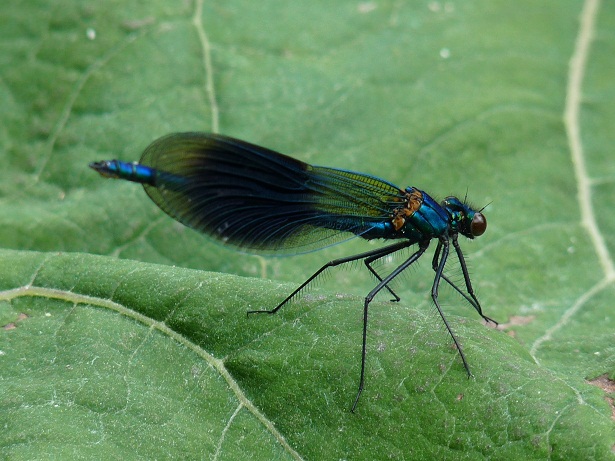
Beautiful Demoiselle (Calopteryx virgo) is the only other Calopteryx found in Belgium and most common in Wallonia, although a few individuals were found in Brussels this year, possibly indicating a northwards range expansion.  Males are told from the Banded Demoiselle by their solid black wings, while the wings of females are brownish.

Sunday, 1 December 2019

Ode-vent Day 1

I'ts time for another online advent calendar!  Since I didn't go to the Amazon this year, and the 2015 edition featured Belgian butterflies, I decided to focus on Belgian odonata this year.  Odonata, or odes, as they are sometimes referred to, is the family comprising damselflies and dragonflies.  Many birders turn to butterflies during the summer months, which tend to be quieter for birds, yet are daunted by the thought of trying to identify the odonata due to the many similar-looking species.  With a bit of patience, however, knowing where to look for the distinguishing features, and a decent photo, one can identify most of the species which are likely to be encountered in Western Europe.

First of all, which is which?  Damselflies tend to hold their wings closed when at rest (although there are exceptions) and are generally smaller and dainter than the more robust dragonflies, which almost always rest with their wings outstretched.

Calopteryx splendens, or Banded Demoiselle, is common throughout Belgium, including Brussels, where it can be most easily seen in Woluwe Park.  Unlike most other damselflies, this family prefers running water and so is mainly found along streams.  It gets its name from the distinctive, dark band on the wings which is only present in males, the females having plain, greenish-tinted wings.

Friday, 29 November 2019

Eilat day 2 (part 2)


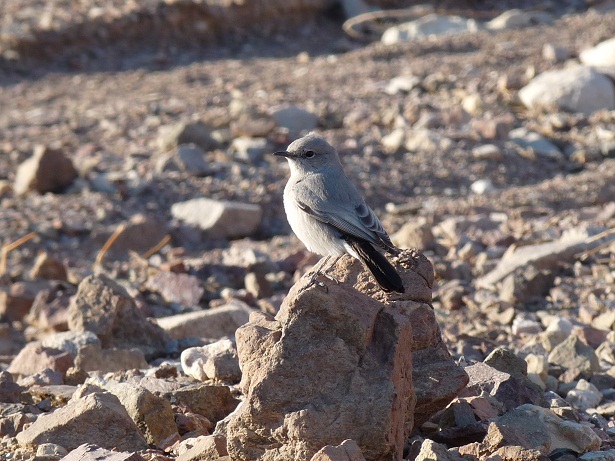
I then headed back to Eilat along the drainage canal, seeing plenty of immature gulls I couldn't identify as well as Black Stork and Caspian Tern, before heading up into the hills and Wadi Shachamon.  This wadi contains typical desert habitat right on the edge of town and used to be a regular wintering site for Pallid Scops Owl.  There have been no reports so far this winter but Noam was confident they should be back already and told me how to look for them so I was pretty confident I would find one if it was there.  It wasn't, of course, but I thoroughly enjoyed my first taste of desert birding in seven years, with White-crowned Black-Wheatear singing within sight of Eilat's last apartment blocks, Blackstart (above), one of my absolute favourites, everywhere, Palestine Sunbird, two Desert Larks feeding at my feet, and a pair of Scrub Warblers showing exceptionally well.


There was also a flowering bush covered in butterflies but, in my rush to check every acacia tree for the owl, I only took pictures of one species.  It turns out to be an African species which is rapidly colonising the eastern Mediterranean and has the wonderful name of Pomegranate Playboy (Deudorix livia).

Eilat day 2 (part 1)

Having already been to Israel, and Eilat, 4 times, this holiday was more about relaxed birding and regularly working my temporary patch than chasing after the few highly localised and difficult species I've still not seen.  So, after an early morning walk around Ofira Park with much the same birds as the previous day as well as a noticeable arrival of Chiffchaffs, I headed to the IBRCE, where I met with its director Noam Weiss.  He was extremely helpful and gave me all sorts of tips and directions to find some lifers so that I decided to give some of them a go after all.  I spent the rest of the morning around the reserve, which was rather quiet but nonetheless provided Little Green Bee-Eater, Graceful Prinia and one or two Marsh Sandpipers, and enjoyed watching a mixed flock of winter-plumaged Dunlin and Little Stints feeding right in front of one of the hides.


Thursday, 28 November 2019

Eilat day 1

Eilat is one of my favourite places in the world to go birding.  Being at the junction of three continents, there is a wonderful mix of European, Arabian and African species, supplemented twice a year by the millions of migrants passing through on their way to or from their wintering grounds in Africa.  As such, there is always a feeling of excitment to birding around Eilat, not quite knowing what could turn up next, together with a myriad of non-breeding plumages to keep even the most experienced birders on their toes.  With just a week's holiday to take this year and only a short weekend in Dublin since I started my new job back in May, it didn't take me long to decide where to spend it once I found out about the ridiculously cheap flights Transavia are offering from Amsterdam to Eilat this winter.
When arriving into a new country, I always wonder what will be the first bird I encounter, and the new Ramon International Airport, located out in the desert, didn't disappoint as the very first birds I saw were a pair of Brown-necked Ravens playing with a stick.  Once in Eilat, having spotted some Greater Flamingoes from the bus, I was pleased to find my room looked out over Ofira Park.  This city park is perhaps my favourite place within Eilat as, during spring migration, it has been so full of migrants you are almost kicking the Wrynecks out of the way!  This was the end of November, however, with migration seemingly over.  Still, my first short walk around the park provided lots of wintering White Wagtails, a juvenile Masked Shrike, plenty of House Crows and a mixed flock of both House and Spanish Sparrows, not bad for my first twenty minutes or so.
I then headed towards the infamous North Beach and was amazed to see Tristram's Grackle at the marina.  This used to be a truly desert species for which one had to travel all the way up to the Dead Sea in order to have a reasonable chance of seeing, but seems to have expanded its range and now hangs around the hotel balconies in downtown Eilat!


The seafront gardens provided another desert species which seems to have moved into town, namely Rock Martin, while North Beach itself was quiet other than a single Common Sandpiper and lots of White-eyed Gulls coming in from Jordan to roost at dusk.  Nevertheless, I was very happy with my first afternoon's birding and full of anticipation as to what the next few days would bring.

Sunday, 17 November 2019

Like lightning

It has gotten cold this week so, yesterday afternoon, I hung a bag of peanuts out on my balcony for the first time since March.  I've written before about how quick my local birds react to me resuming my winter feeding but, yesterday, they smashed all records as I had both Great Tit and Blue Tit feeding within ten minutes!  How is that possible?  It's almost as if they've been sitting there waiting for me to get my act together since autumn began.  My local park has been devoid of Chiffchaffs for a few weeks now although I did find one in some waterside willows elsewhere in Brussels last weekend.  More unexpected, though, was a group of around 20 Lesser Black-backed Gulls.  We usually have one or two overwintering along the canal somewhere but mid-November is very late for such a large group this far inland.  Other lingerers making the most of the sun were some Sympetrum dragonflies and a couple of Clouded Yellow butterflies, which are scarce in Brussels in general but almost unheard of in November.